By Jasmine Blass
Studies have revealed that from week six through the fifth month of pregnancy, approximately 100,000 neurons are developed in the brain of a baby. At birth, however, not all these cells are connected, so in the following years connections will continue. During the first five years of life, the greatest number of neuronal connections will be formed. These will be the basis for later learning.
Each time a baby uses one of the five senses (hearing, sight, smell, taste, touch) a new brain connection is made. When a child has different kinds of repeating experiences, more brain connections are strengthened. On these depend the way your children think, feel, behave, and learn. We can even say that these repeating experiences will determine what children will be and how they will develop in adulthood.
It is during this stage that art is so important, because it offers great sensory experiences, strengthens the ability to think, and helps develop fine motor skills. One of the artistic expressions that has great relevance in this area, without a doubt, is modeling, as it helps develop the visual language that we learn from the moment we open our eyes. In addition, by creating his own projects, your child will be learning multiple lessons.
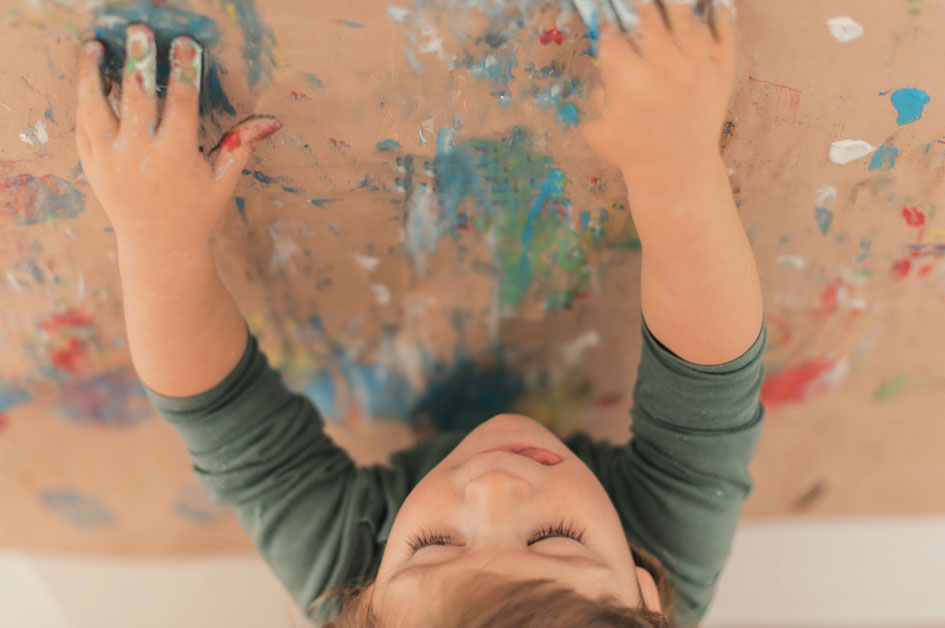
As your children play with and mold Play-Doh or similar products or slide their paintcovered fingers around on paper, brain connections are made. When a child sees that moving a crayon on paper leaves a mark, he learns about the cause-and-effect relationship. Having a paper in front of him, and having to think about what he can draw on the paper, leads him to make decisions and therefore to resolve issues.
By letting children express their own interpretations of the world around them, we are stimulating their creativity. But what do we mean by creativity? The word creativity comes f rom the Latin creare, which means “to procreate, to produce, to bring forth.” Therefore we understand that creativity encompasses the entire process of searching for new ideas. This process involves the use of imagination and takes place in the right hemisphere of the brain.
These days, traditional teaching methods place more emphasis on using the left hemisphere, which is in charge of memorizing, doing math, and so on. However, the challenge is to have a brain with two well-balanced hemispheres, as suggested by many studies from the Massachusetts Institute of Technology. Research indicates that the brilliance of minds like that of Albert Einstein originates from an excellent connection between the two hemispheres of the brain. Therefore it is recommended that children be inspired to use both parts from an early age. Art is the best way to encourage the right hemisphere to integrate emotion with thought, for this fulfills an important function in child development and makes art a strategically of education.
Recommendations for developing the creative process
Before the creative moment, brainstorm about things related to the topic of interest. Taking into consideration the age of the child, provide a variety of different materials (paper, crayons, colored pencils). You will realize that books filled with predrawn pictures somehow becoming a limiting factor.
Remember that what matters is the creative act, not the result. Do not say things like “the sky has to be blue” or “a dog’s ears don’t look that.” Doing so can generate insecurity in the child and limit the possibilities of stimulating his imagination by imposing standards or parameters for creation. On the contrary say something like this: “What a good idea, I hadn’t thought of that!”
If the child seems to be having difficulty getting started, ask questions. For example, “What is your favorite animal?” or “Which do you prefer drawing—the forest or the sea?””
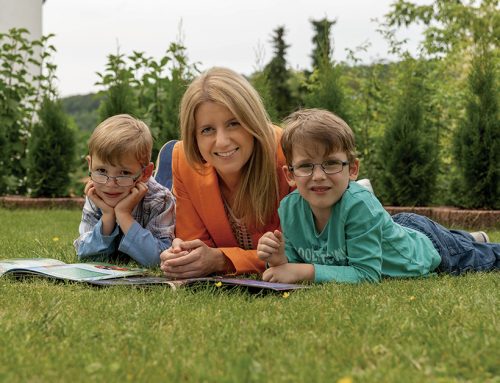
The use of literature also helps to stimulate creativity. This can be done by reading a Bible story during art time. It is a good idea to ask questions during the reading, such as, “Why do you think he or she acts like this?” In that way, you will be able to inspire values and faith in the child, and later help him to illustrate his own interpretations of the story.
If possible, you should sometimes involve more children in your art/reading projects to promote tolerance, respect for others, teamwork, etc.
Give children opportunities to talk about their artistic creations. Ask such questions as, “Why did you draw this?” and “How did you feel when you drew this picture?” Involving yourself in the art projects of your children can improve your communication with them as well as your understanding of and affection for one another. The children will also learn to know themselves better.
Display your children’s art work. Put drawings on the fridge, a mirror, or any other place where the drawing can be seen by others. This will help the children know the value of what they are doing, encourage them to continue creating, and also wonderfully affect their self esteem.
Visit museums, where children can interact and learn.
While children continue creating their own art work, they will learn that the world is diverse, that there are colors, shapes, and different textures. And when they become adults, they will understand that there are different ways to think in the world. They will have developed their own values while continuing to be sensitive and empathetic people.
References in Spanish
Diane Trister Dodge, Cate Heroman. Cómo estimular el cerebro infantil. Una guía para padres de familia (1999).
Educación 3.0 La importancia de trabajar los dos hemisferios del cerebro (04/07/18). https://www.educa- ciontrespuntocero.com/recursos/trabajar-hemisferios-del-cerebro/
Compartir palabra maestra. Cotes A. La importancia del arte en la educación (01/27/18). https://www. compartirpalabramaestra.org/actualidad/blog/la-importancia-del-ar- te-en-la-educacion